
Wrist Dynamic Stability and Proprioception
Aim
Proprioception is our sense of our body and position of our joints in space. It allows us to coordinate movements and is important in wrist stability. It is important to include exercises that focus on proprioception for wrist rehabilitation.
General advice
Start with the first list of exercises and as they become easier and with advice from your therapist progress to the further exercises.
Your therapist will discuss how often to do these exercises.
Start with
Joint position sense matching
- Close your eyes and rest your elbows on the table. Move your unaffected wrist and hand into a comfortable position. Keeping your eyes closed try to copy this position with your affected wrist and hand. Repeat in different positions.
Completing tasks with your eyes closed
- Throwing a ball to each hand, increase your speed as this becomes easier.
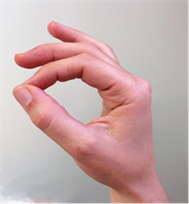
- Bring each finger to thumb with your eyes closed, start slow and continue to increase the speed as accuracy becomes easier.
Progress to
Balancing a ball on a tray or tennis racket
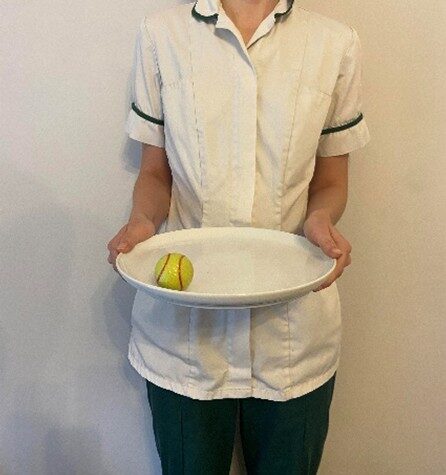
- Hold a small light tray or racket both hands as shown in the photo.
- Place a ball in the middle of the tray and try to keep the ball still.
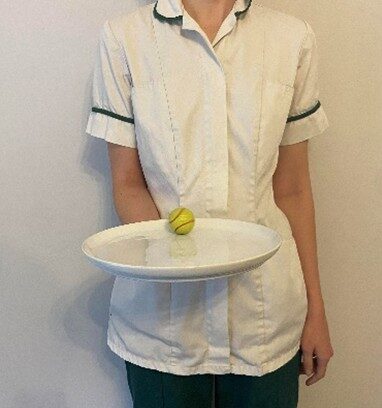
- This can be progressed to moving the ball slowly and with control to the corners of the tray/racket. Move the ball to make circles on the tray/racket. To make it harder use only your affected hand under the tray to move the ball, as shown in the second photo.
- Start with a larger ball and work your way to a smaller ball to make this more difficult.
- Bouncing a ball up/down on a tennis racket is also a good exercise for dynamic wrist stability.
Apps / games
- Apps or games that use small accurate movements of the wrist – tilt maze lite, labyrinth, mazeball puzzle.
- Holding a jug and pouring the water into a cup, controlling the movements with the wrist. Increase the weight of the jug as this becomes easier- as well as a smaller area to pour into to make accuracy more difficult.
Advanced
Resistance exercises
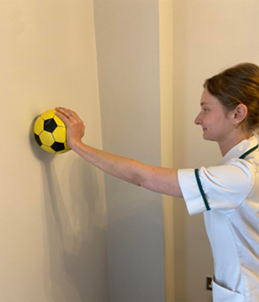
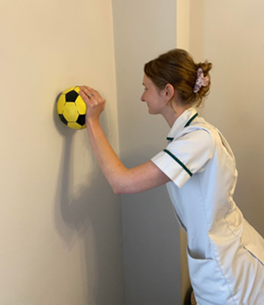
- Push up against a wall with a ball in one hand, as you move closer to the wall focus on controlling the wrist position to support yourself.
- This can also be completed by doing a press up on a wobble board.
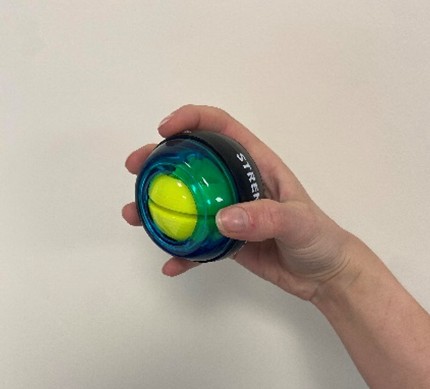
- Powerball, ensuring you are using one with a gyroscope, supports wrist strengthening. An example is shown in the left photo below.
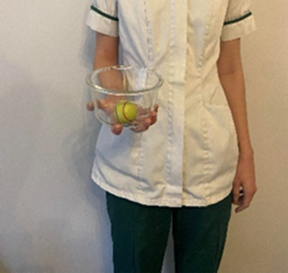
- This can be made easier by put a ball in a bowl and moving it around the bowl with the circular movements of your wrist as shown in the second photo.
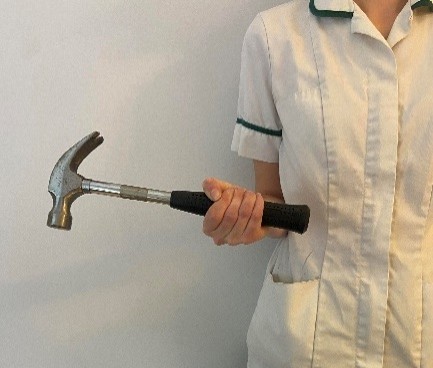
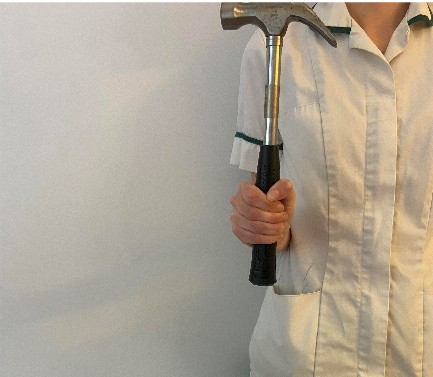
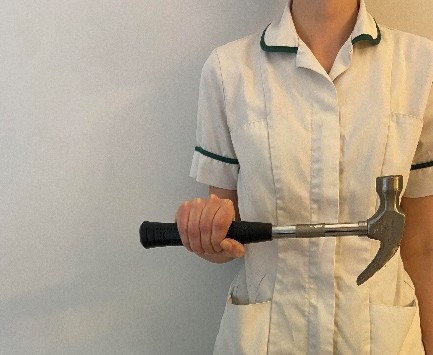
- Controlled and weighted rotation of the wrist, using an object such as a hammer that has weight at one end.
Contact numbers
We hope that you have found this information useful. If you have any questions, you can contact the Hand Therapy Department on 01305 255931.
About this leaflet
Author: Felicity Tucker
Written: January 2026
Approved: January 2026
Review date: January 2029
Edition: v1
If you have feedback regarding the accuracy of the information contained in this leaflet, or if you would like a list of references used to develop this leaflet, please email patientinformation.leaflets@dchft.nhs.uk
Print leaflet