
Going for a Colposcopy (Easy Read)
This leaflet explains what you need to know about having a colposcopy.
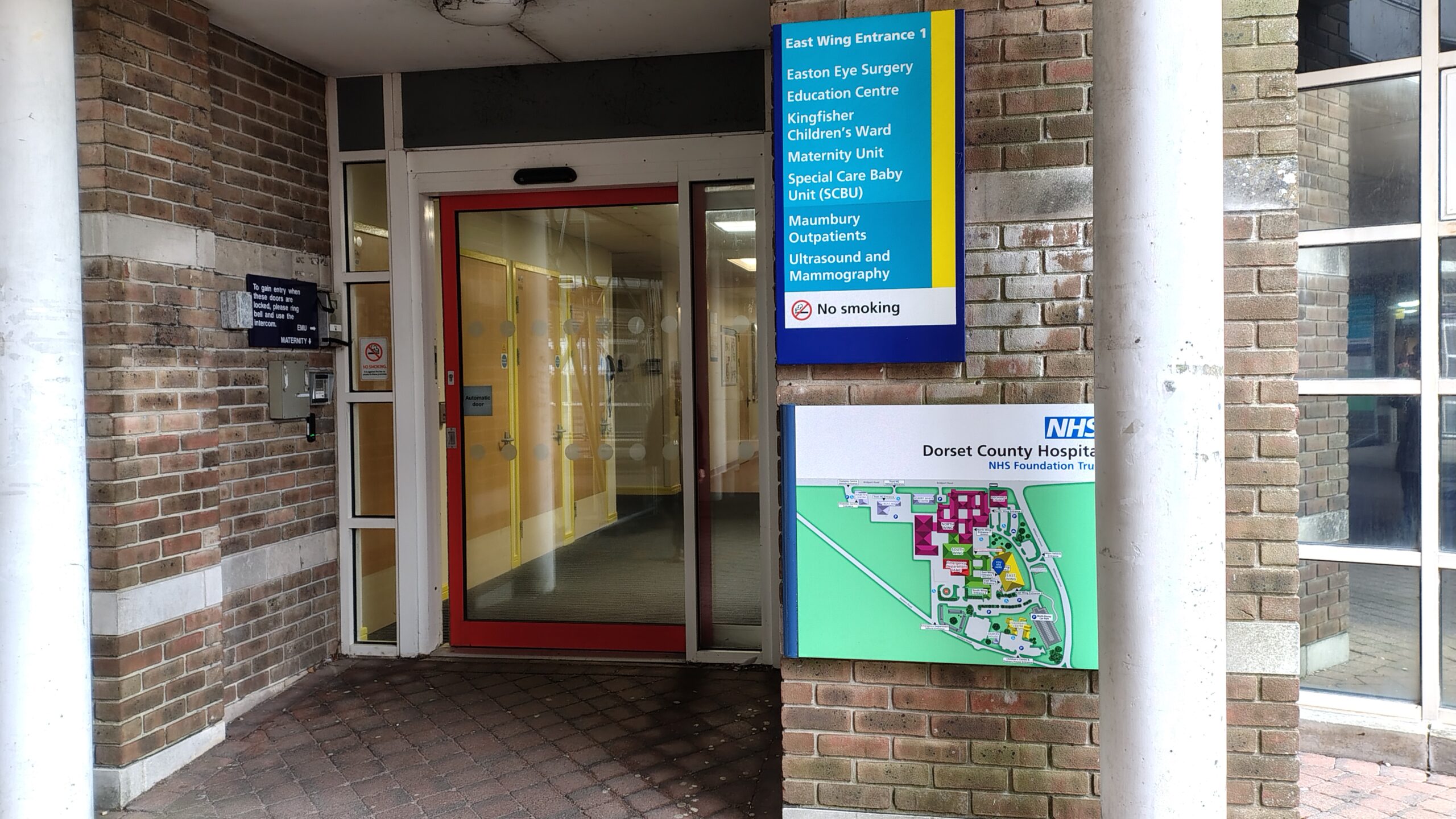
When you arrive at Dorset County Hospital, please come to the East Wing Entrance 1, which is near the landmark called the ‘Pencils’.
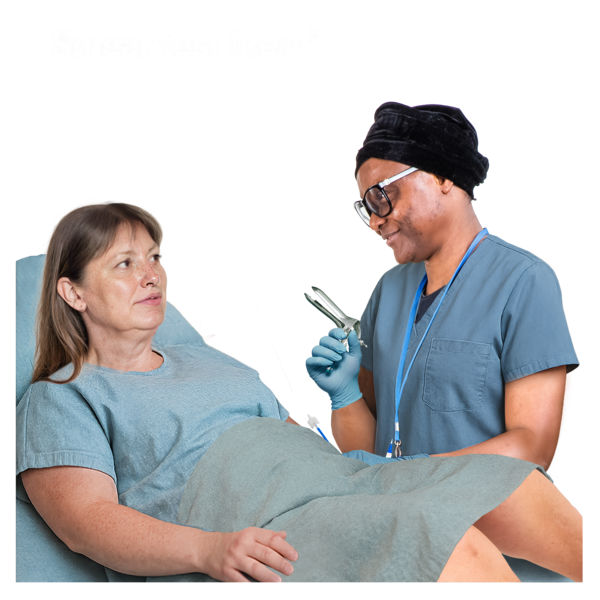
What is a colposcopy?
A colposcopy is a test of your cervix. The cervix is inside your vagina. A colposcopy checks for any changes that may turn into cancer.

A colposcopy happens at a hospital. You can go home when it is finished.

Having you colposcopy
You will have to take off your trousers and pants.
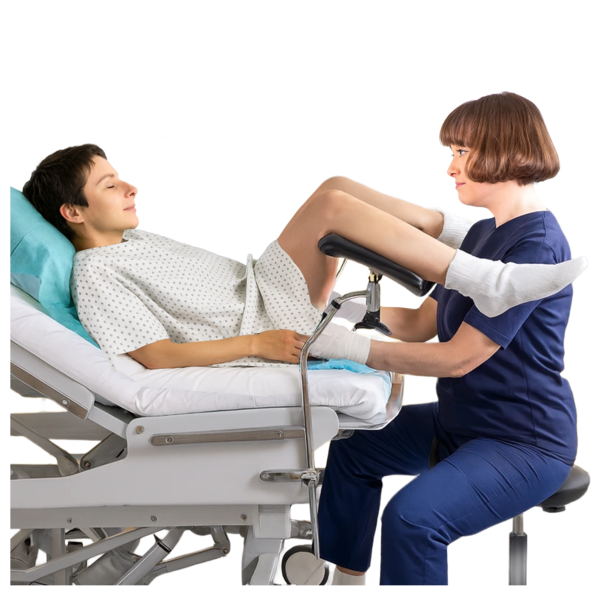
You will lie on a special couch. The couch will have supports for your legs.

The doctor or nurse will gently put a speculum inside your vagina.

The doctor or nurse might put some liquid into your vagina. This helps them to see any changes. This should not be sore.
The doctor or nurse will use a special camera to look inside your vagina.
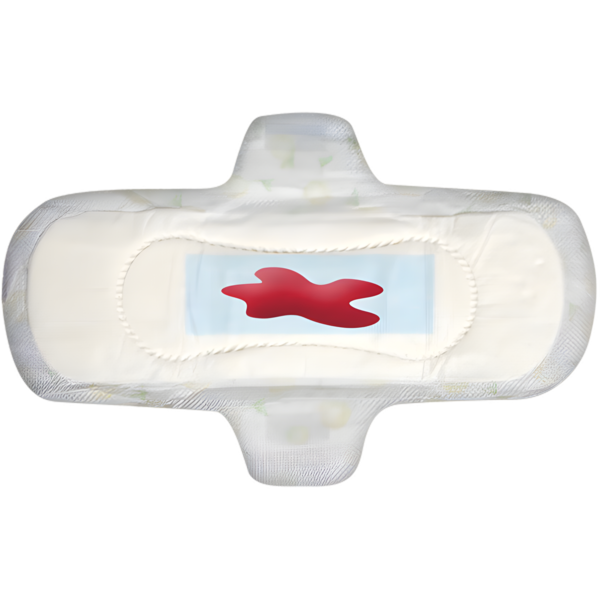
You will need to wear a sanitary towel when the colposcopy is finished. You may bring your own or we will give you one if you do not have one.
When it is finished you might have a brown or black discharge from your vagina. This is normal.

It may also be possible to have the colposcopy on another day while you are asleep if you find it too uncomfortable when you are awake – you will need to speak to your doctor or nurse about this.

After the colposcopy
Your vagina and tummy can be sore after your colposcopy. This is normal.

Phone the doctor if:

- You have a high temperature
- You have lots of bleeding from your vagina

- You have a very sore tummy

- You have the chills and are feeling very cold and shivery.

We hope that you have found this information useful.
If you have any questions or are worried about anything, please speak to your family doctor (GP) or the following Dorset County Hospital staff:
Colposcopy Department: 01305 255729

About this leaflet
Author: Jen Potter and Lorraine Bond
Written: June 2025
Approved: June 2025
Review date: June 2028
Edition: v1
If you have feedback regarding the accuracy of the information contained in this leaflet, or if you would like a list of references used to develop this leaflet, please email patientinformation.leaflets@dchft.nhs.uk