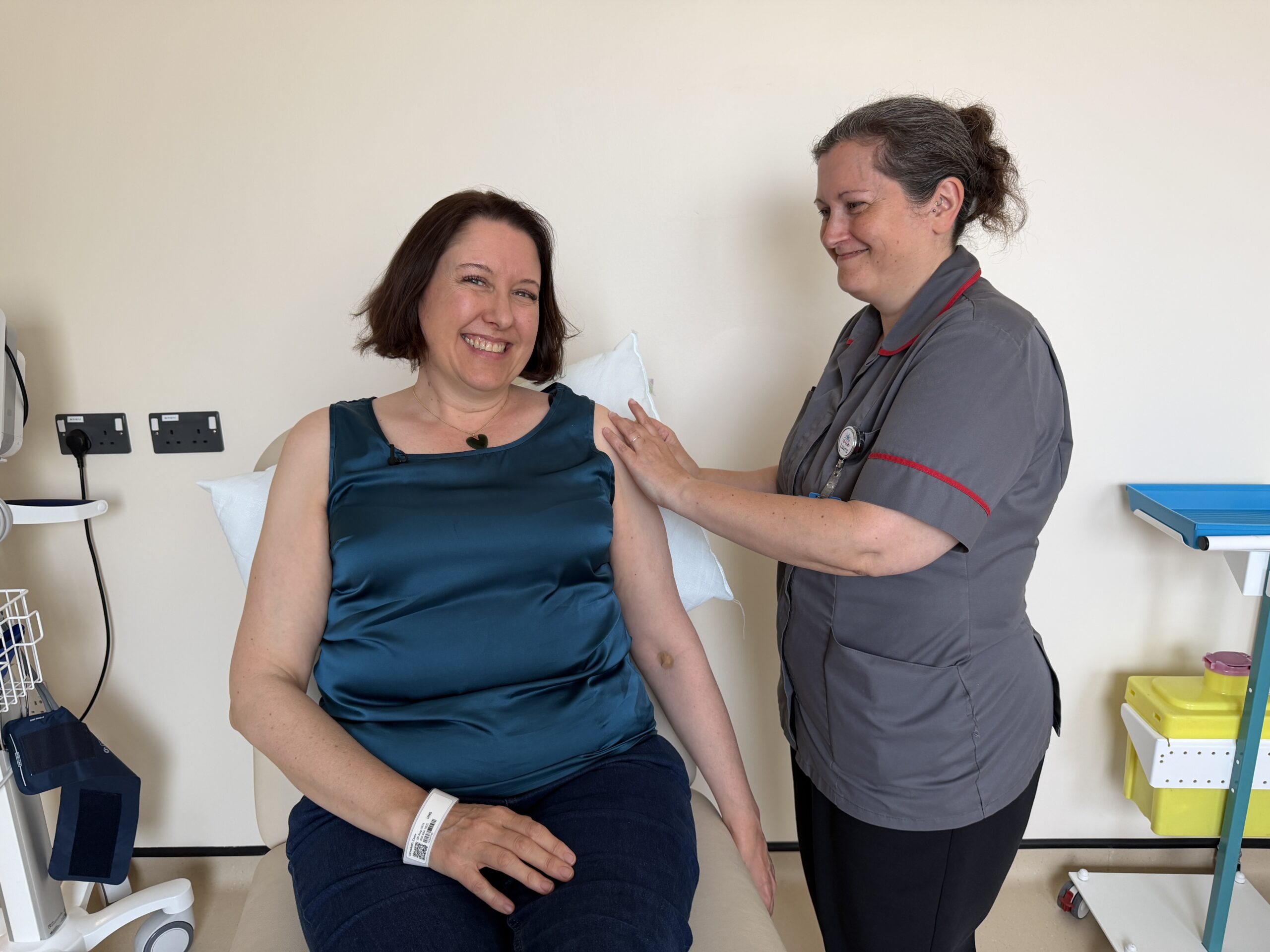
Bird flu vaccine trial launches to prepare for potential pandemic
Researchers have delivered the UK’s first dose in a new trial using an investigational mRNA vaccine to protect people against potential influenza pandemics such as avian flu (also known as ‘bird flu’).
The research will assess the safety and immune response of an investigational mRNA-based A(H5) pandemic influenza vaccine candidate, mRNA-1018, commonly circulating in birds, with pandemic potential.
The study is supported by NIHR and sponsored by Moderna. It is part of its UK government strategic partnership, managed by the UK Health Security Agency (UKHSA).
The study is also supported by Moderna’s collaboration with the Coalition for Epidemic Preparedness Innovations (CEPI).
This large-scale, phase 3 trial will involve around 4,000 adult volunteers aged 18 and over in the UK and USA. 3,000 patients (75%) recruited will be in the UK.
Bird flu is currently transmitted between affected birds and various mammals. Whilst the virus does not easily spread to humans, and transmission between people is very rare, there is a risk that the virus could adapt. This could make it more transmissible to or between humans.
Since 2024, there have been 116 confirmed human cases across the world. Almost all are linked to close contact with infected animals.
This study aims to provide crucial evidence on whether the investigational vaccine can generate strong immune responses to protect against currently circulating and emerging strains of H5N1. This will help the UK prepare for future pandemics and apply system-wide learnings from COVID-19.
There will be 26 sites across the UK administering the vaccine. In line with the government’s hospital-to-community shift, the study is being delivered at various community clinics across England and Scotland.
For more information on this new A(H5N1) vaccine trial, visit the NIHR’s Be Part of Research service.
This trial forms part of a wider response to tackling bird flu. Vaccine trials have already started to help protect poultry in the UK, following the recent outbreaks.
Dr Rebecca Clark, the trial’s National Co-ordinating Investigator based at Layton Medical Centre, Blackpool said: “We know that the A(H5N1) strain is evolving and spreading across animal species, and though it does not yet move easily between humans, we have to treat human-to-human transmission as a real possibility. This trial is our proactive attempt to shield against that possibility, and any future pandemic that could emerge from it.
“With recruitment sites across the country, we have shifted from traditional hospital settings into the heart of our communities, helping ensure the research can be carried out across a range of locations and populations.
“This work is an important part of strengthening our understanding of how we can respond to emerging public health threats and improve pandemic preparedness for the future.”
Professor Lucy Chappell, Chief Scientific Adviser at the Department of Health and Social Care (DHSC) and Chief Executive Officer of the NIHR said: “This important trial is a testament to the power of the UK’s strategic partnership with Moderna. By combining world-leading technology with the UK’s unparalleled research infrastructure, we are bolstering our pandemic resilience.
“Central to this effort is the NIHR’s Be Part of Research registry, which offers people a quick and easy way of taking part in some of the UK’s most exciting research. With over 700,000 people signed up so far, it is a key pillar of the UK’s research landscape.”
“This trial proves that when the public, the government, and industry collaborate through the NIHR, we can accelerate the journey from laboratory to clinic – protecting public health both in the UK and across the world.”
Darius Hughes, UK General Manager at Moderna, said: “This study is an important example of how Moderna’s strategic partnership with the UK government can support pandemic preparedness in practice. By advancing research on an investigational mRNA vaccine against pandemic influenza and supporting rapid clinical trial delivery in the UK, we are helping build the evidence, experience and readiness that can inform future responses to emerging public health threats.”
Health Innovation and Safety Minister, Dr Zubir Ahmed, said: “This trial is a powerful example of UK science and the NHS working at their best – and it shows just how far we’ve come. Bird flu is a threat we continue to take seriously, and this mRNA vaccine trial puts us ahead of the curve.
“Just last week, we announced that average clinical trial set-up times have fallen from 169 days to 122 days — and today’s news shows exactly what that progress means in practice. The first trial participant was enrolled in less than half the time of our 150-day target. That is not just a statistic; it is faster access to potentially life-saving vaccines for people across the country.
“This is proactive, science‑led pandemic preparedness in action – building the capability now so we have the best possible chance of protecting people quickly if the virus does begin to spread between humans.”
Vaccine innovation
mRNA forms part of every human cell. It is the way in which the instructions in our genes (DNA) are used to make certain specific proteins. When used in vaccines, mRNA delivers the instructions for replicating proteins identical to those found in a particular virus. In this case, bird flu. Once replicated, it is hoped that our immune system will recognise it as a foreign body and produce antibodies that will attack the protein if they encounter it in an actual virus.
The study is being run as part of the UK Vaccine Innovation Pathway – a UK-wide Clinical Trial Accelerator. This expedites vaccine trial set-up and delivery and takes vaccine trials closer to where people live. The first participant was enrolled into the trial in less than half the time of the government’s 150 day study set-up goal.
The trial is supported by the NIHR’s Agile Research Delivery Team, who play a key role in delivering research in communities.