
Having an EEG Test (photo description)
An EEG test helps your doctor to find out more about what is happening in your head.

Before you come
- Wash and dry your hair
- Have your usual meals
- Bring a comb.
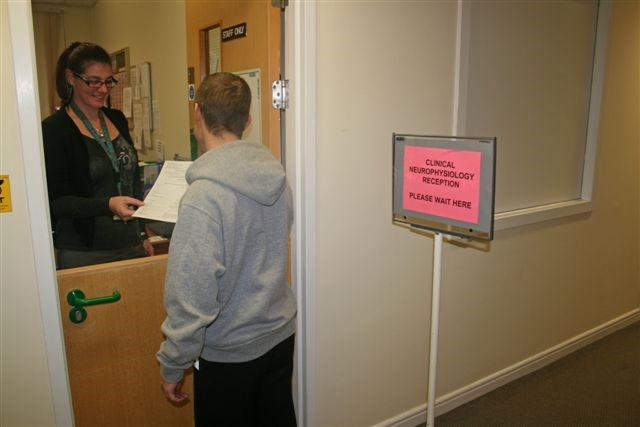
Coming to the department
When you arrive, we will check you in.
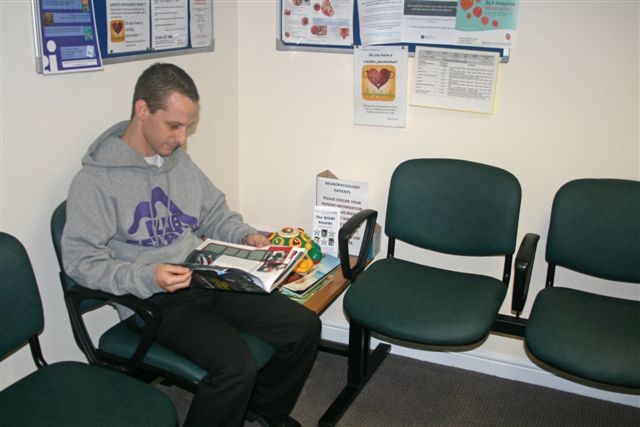
You will sit and wait a short while.
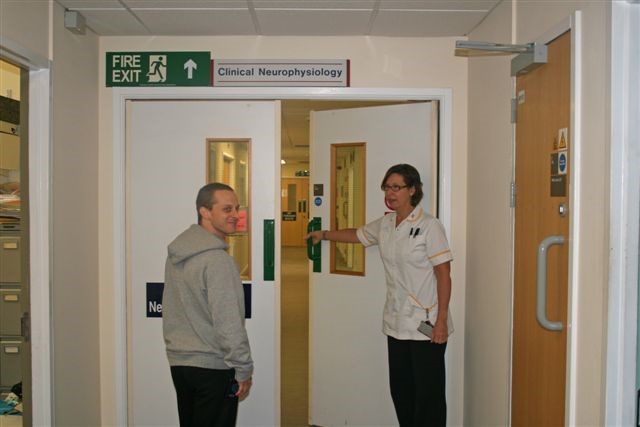
Then you can come in for your EEG.
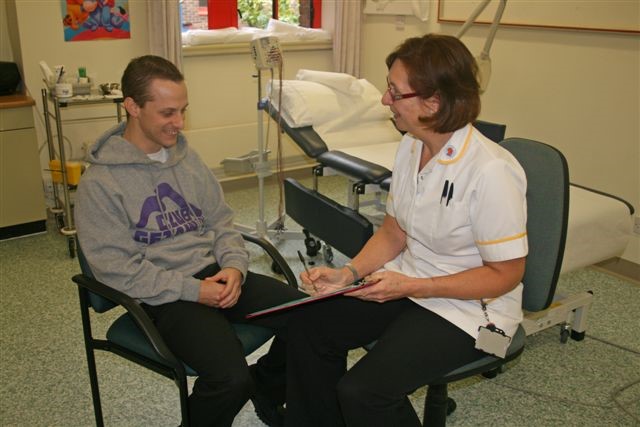
We will talk to your symptoms.
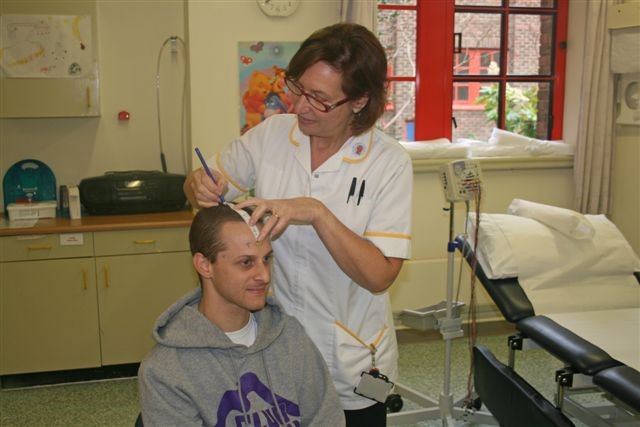
Next we will measure your head and mark it with a pencil.
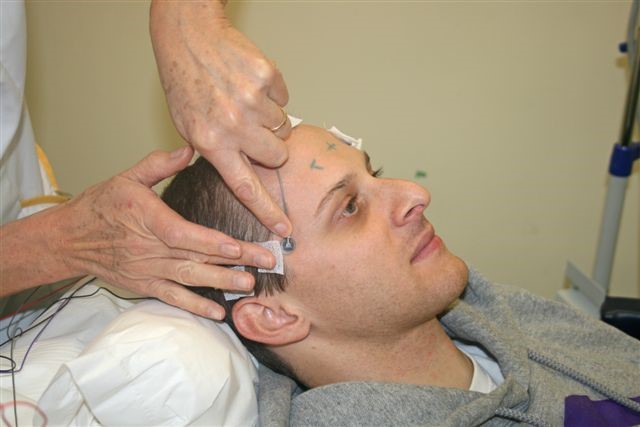
We will put 22 little wires on your head with cream and two on your arm. You will feel a little rubbing on your head but it does not hurt.
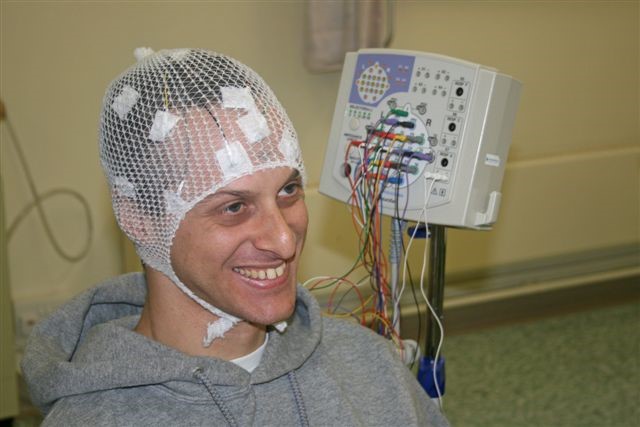
Sometimes we will put a net hat over the wires to keep them in place.
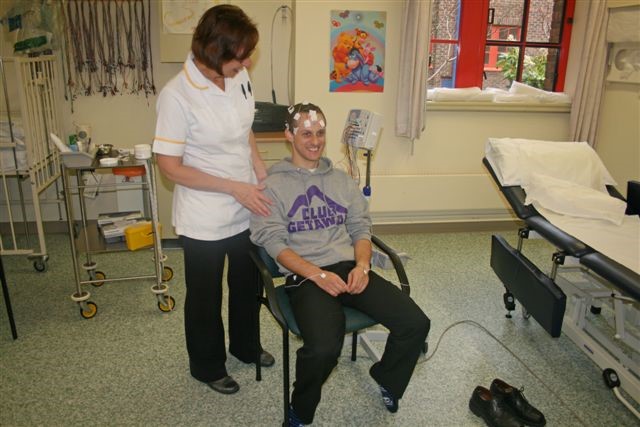
We like you to lie sown but some people can sit in a chair instead. Try to stay as still as you can.

Then we measure tiny signals from your brain. It takes about 20 minutes. You do not feel anything at all.
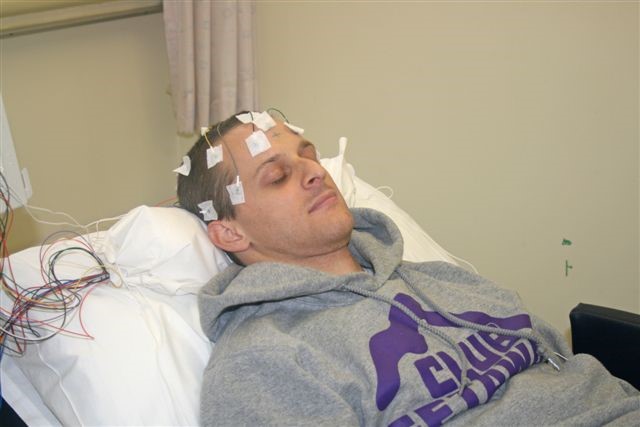
We will ask you to open and close your eyes and maybe take some deep breaths too.
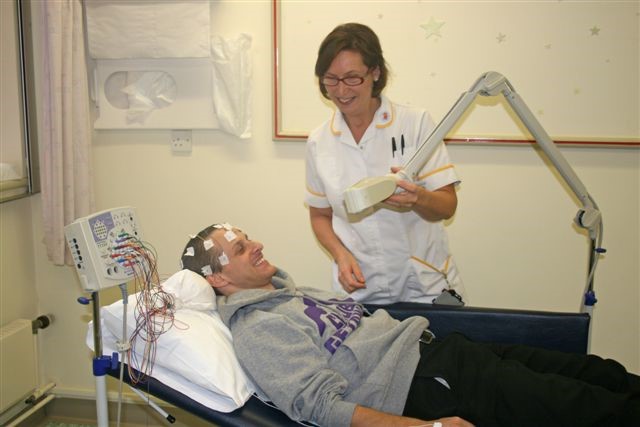
We may show you a flashing light.
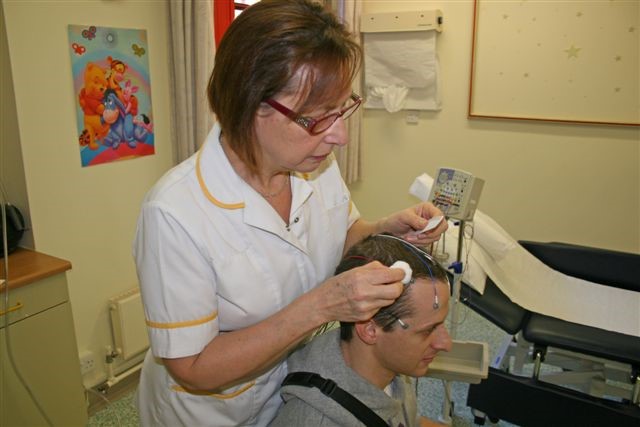
Afterwards we will lift the wires off and wipe away the cream.
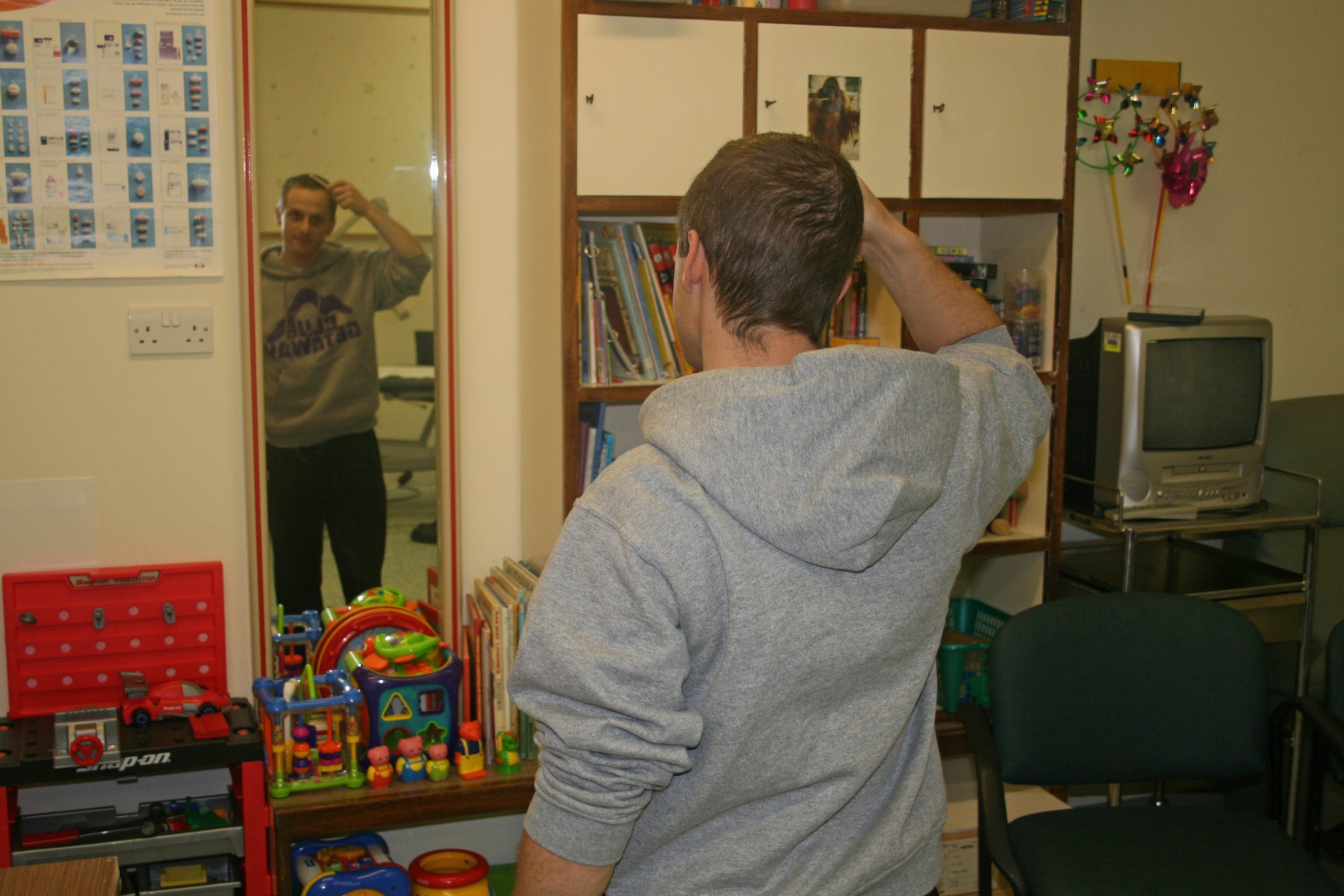
Then you can grab your comb to sort your hair. It’s them time to go home.
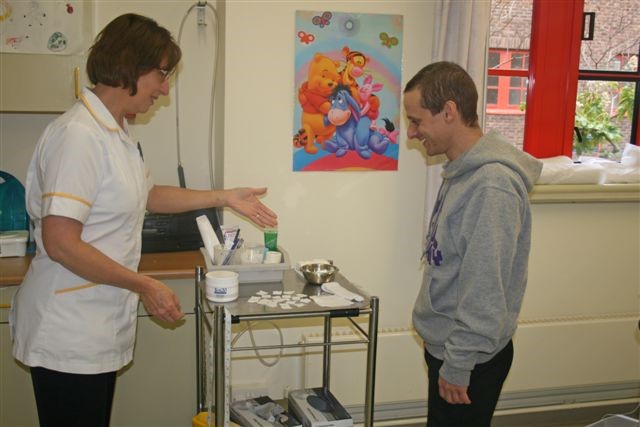
Things we can do to help you feel relaxed
- We explain everything to you
- We show you what is going to happen
- We give you plenty of time.
If you are worried about your appointment:
- Visit – arrange to look around before your appointment
- Support – bring someone your trust
- Ask – ask us questions about your test
- Tell us – if you are worried about your test, let us know.

About this leaflet
Author: Monica Freeman
Written: June 2014
Approved: June 2014
Review date: June 2018
Edition: v1
If you have feedback regarding the accuracy of the information contained in this leaflet, or if you would like a list of references used to develop this leaflet, please email patientinformation.leaflets@dchft.nhs.uk