
Having a Nerve Conduction Test (photo description)
This test helps to find out how your nerves are working.
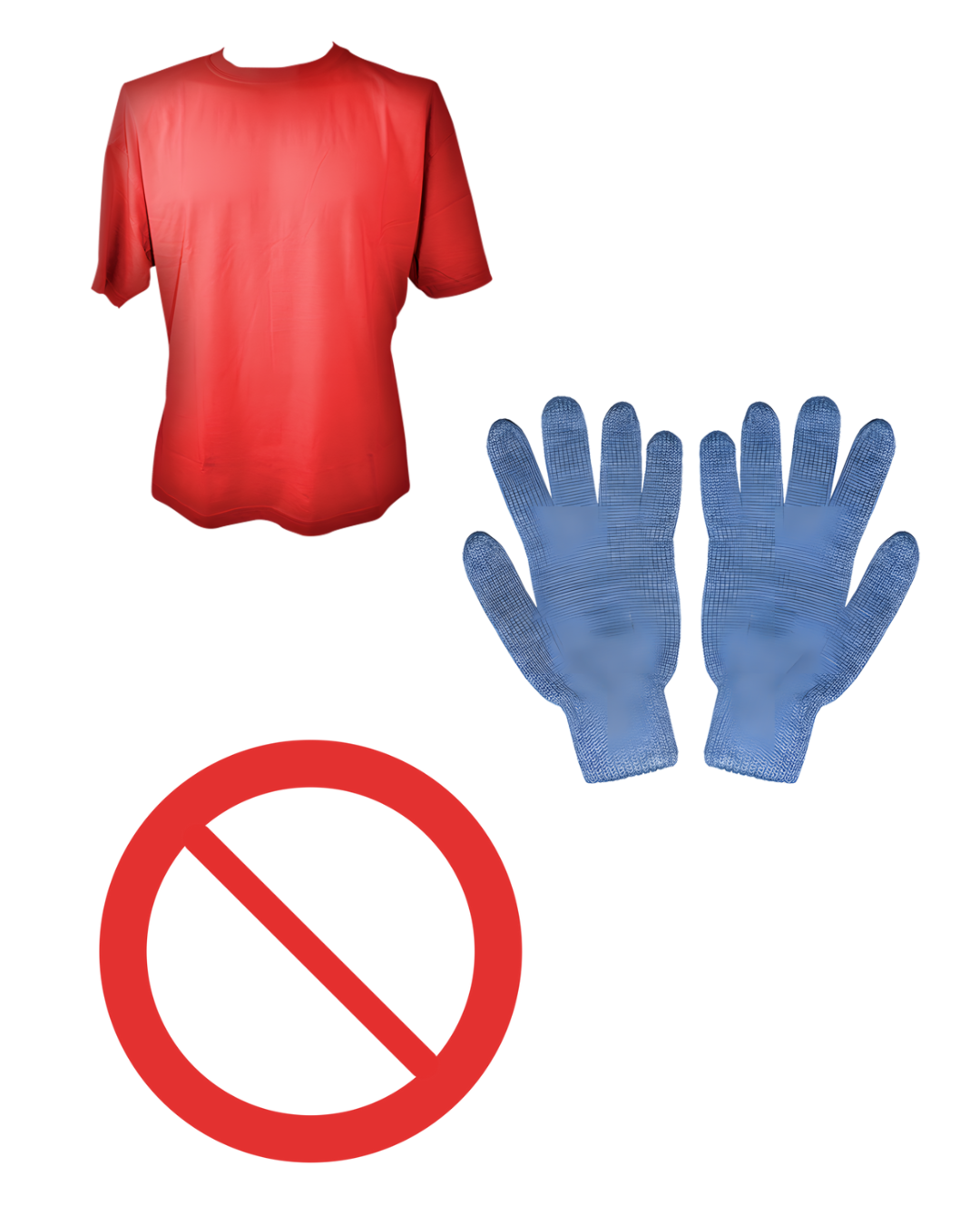
Getting read
- Wear something with loose sleeves
- Keep your hands warm. You might need gloves
- Please don’t use creams on your hands or arms.
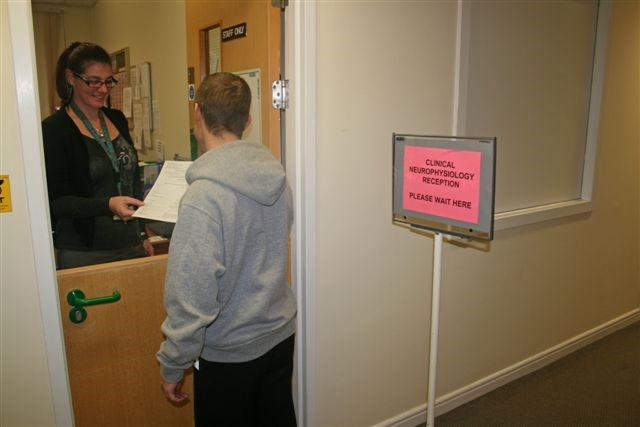
Coming to the department
When you arrive, we will check you in.
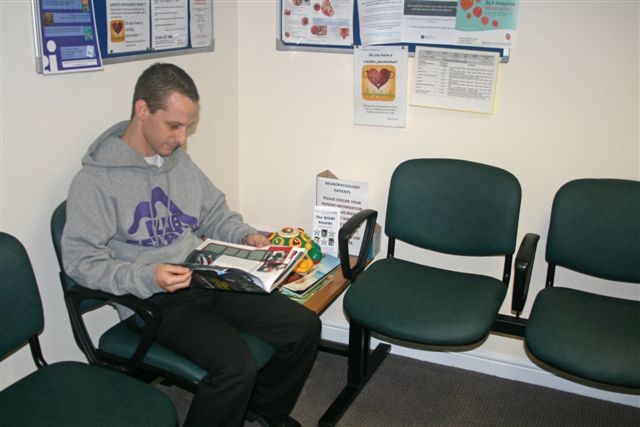
You will sit and wait a short while.
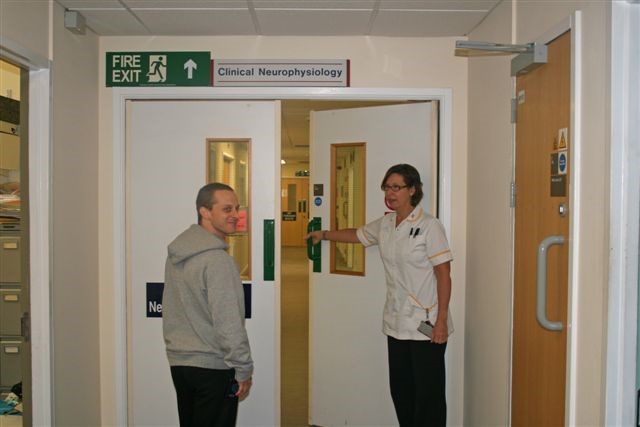
Then you can come in for your test.
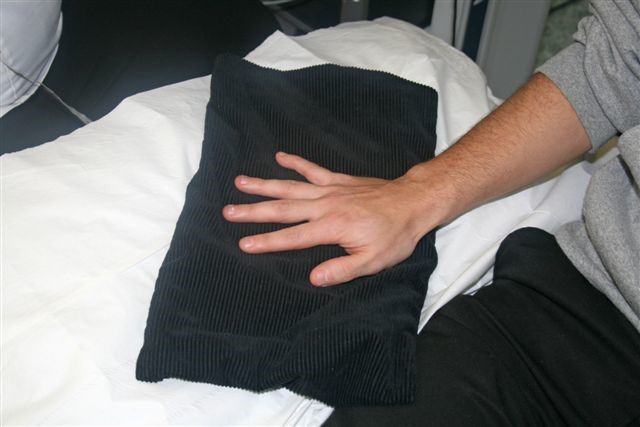
We will talk to you about your hands. If they are cold you can put them on a warm pad until they are ready.
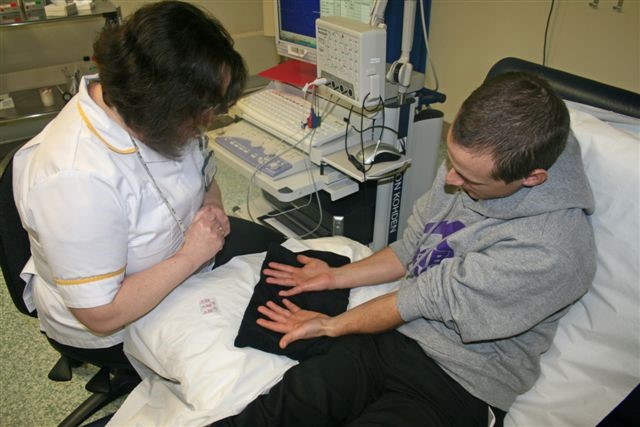
We will check your hands and ask you to move your fingers. You may need to take off your watch, rings or bracelets.
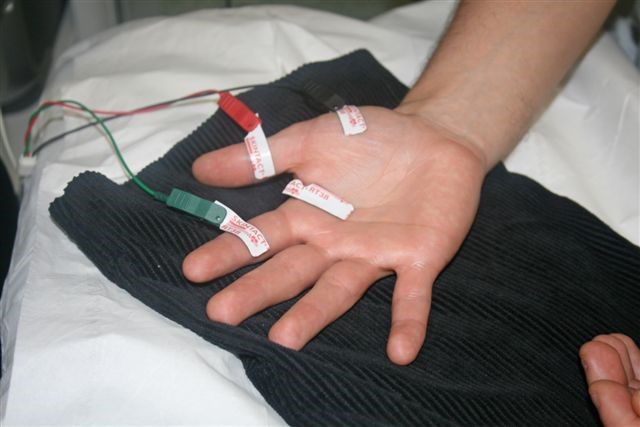
Next we will put some stickers and wires on your hands and fingers.
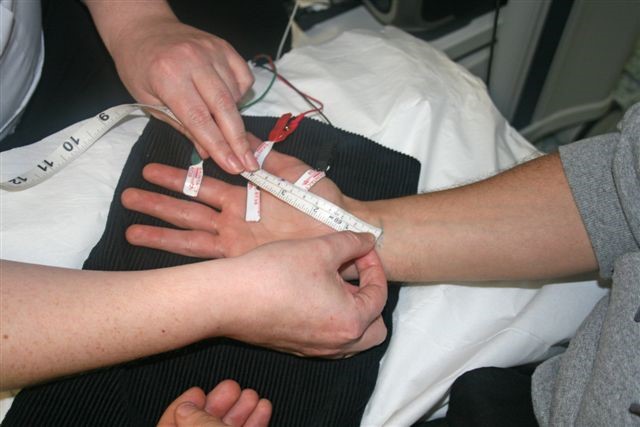
We will measure your hand with a tape and mark it with a crayon.
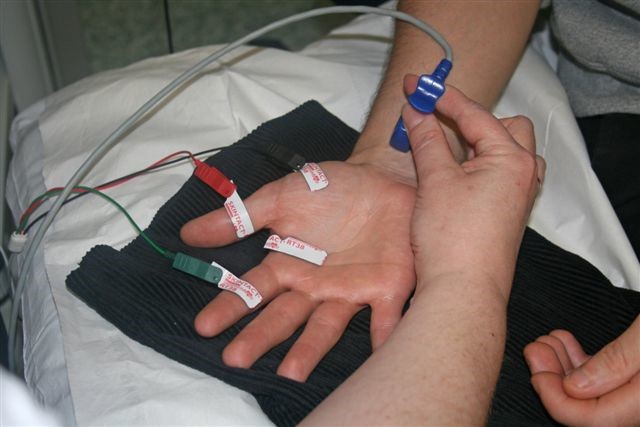
We will send little electric pulses on to your hand, wrist and arm. It makes a funny, tingly, tapping feeling. Some pulses make your hand twitch.
It is helps you can relax your hand.
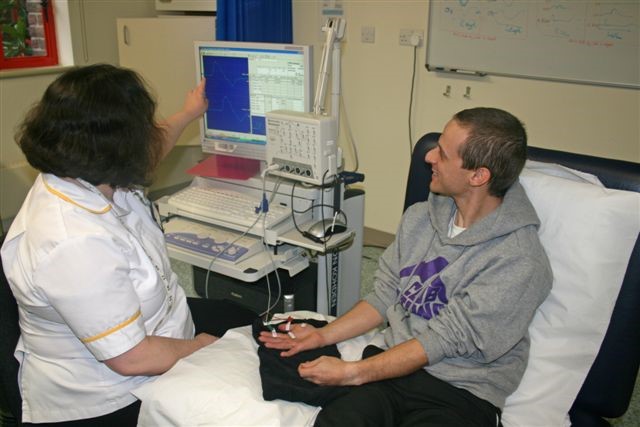
The computer measures how fast or slow your nerves send their messages. This shows how well they are working. We take several readings from different nerves.
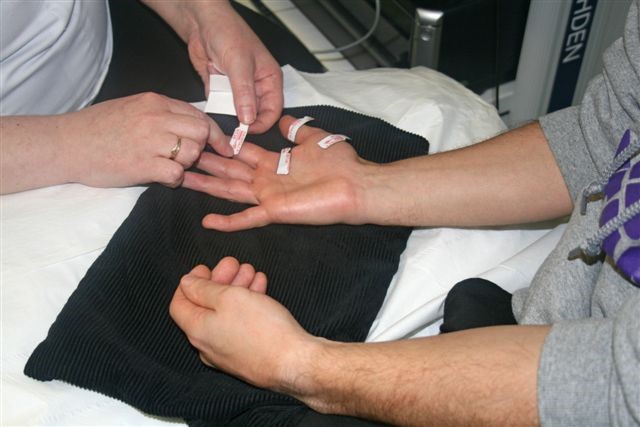
Afterwards we lift off the wires and stickers. Your hand may feel slightly tingly for a little while but will soon be fine again.
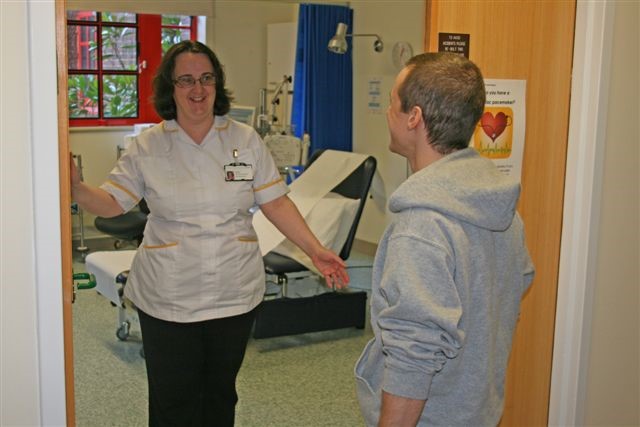
Then it is time to go home. We will send the results of the test to your doctor.
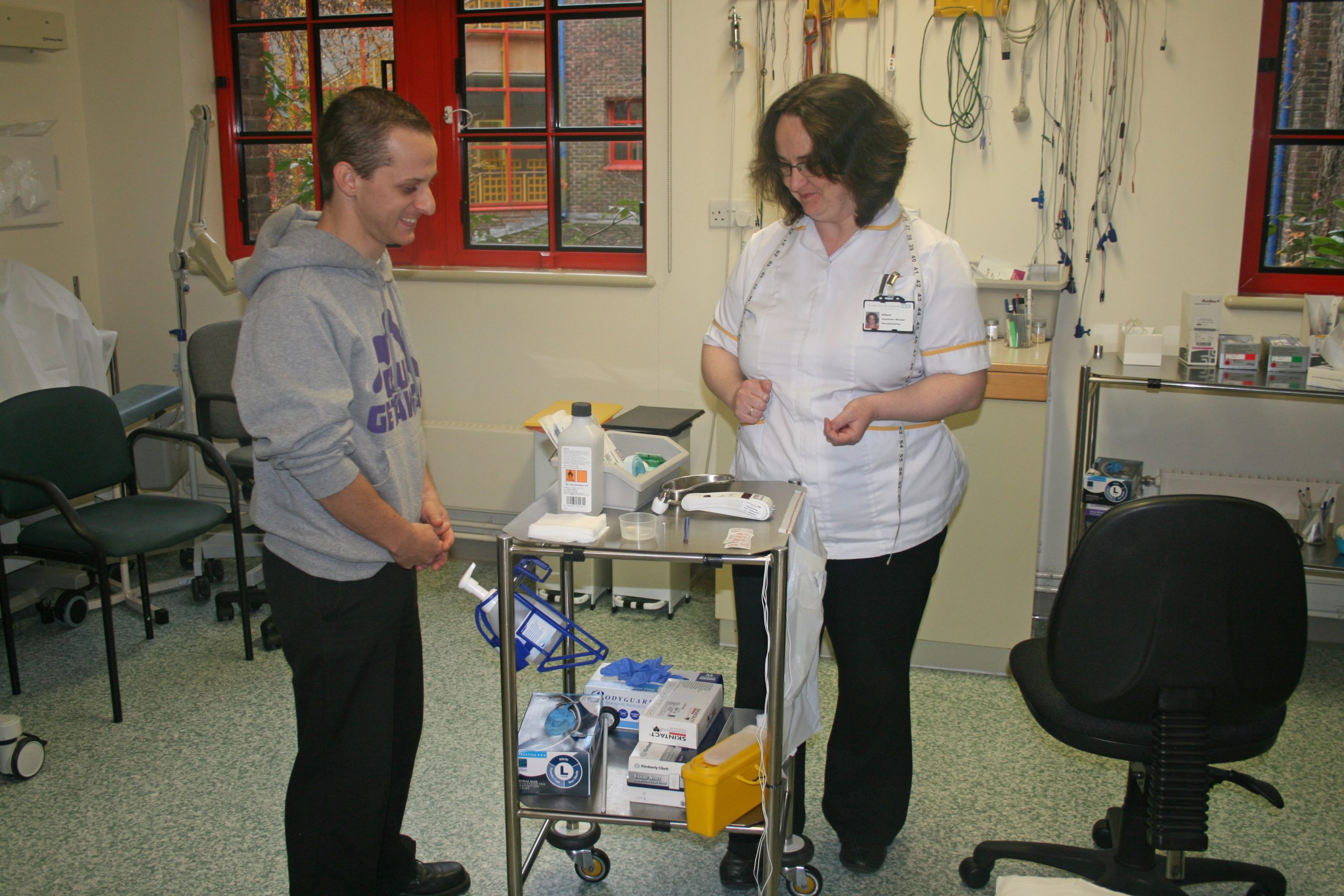
Things we can do to help you feel relaxed
- We explain everything to you
- We show you what is going to happen
- We give you plenty of time.
If you are worried about your appointment:
- Visit – arrange to look around before your appointment
- Support – bring someone your trust
- Ask – ask us questions about your test
- Tell us – if you are worried about your test, let us know.

About this leaflet
Author: Monica Freeman
Written: June 2014
Approved: June 2014
Review date: June 2018
Edition: v1
If you have feedback regarding the accuracy of the information contained in this leaflet, or if you would like a list of references used to develop this leaflet, please email patientinformation.leaflets@dchft.nhs.uk